
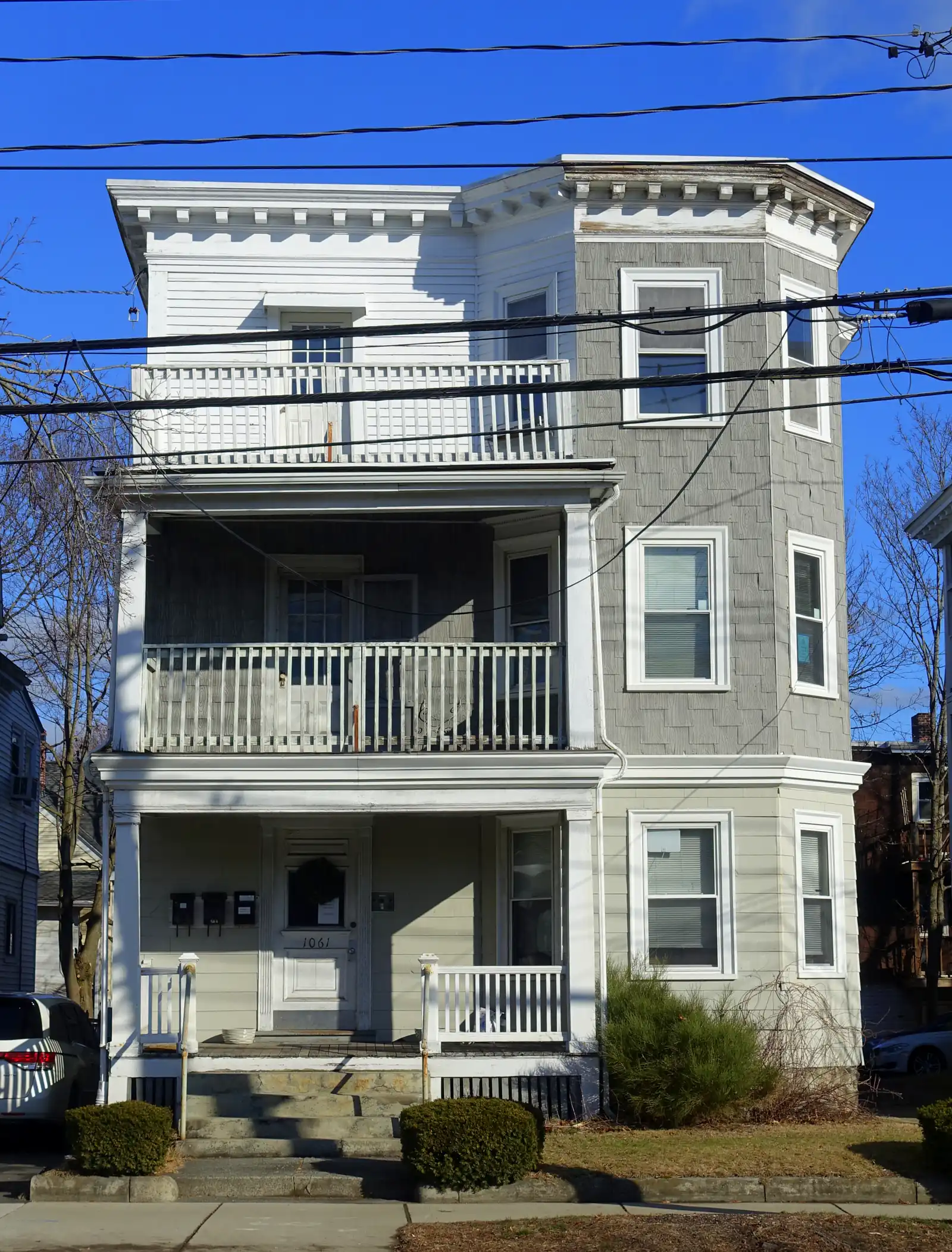
Lawrence, Lowell, Haverhill, Methuen and Manchester are full of two- and three-family homes built for exactly the strategy people are rediscovering now: live in one unit, let the other units carry most of the mortgage. It still works. It just has to be done with real numbers, and the numbers in this area have a few local quirks.
Why multi-family is the Merrimack Valley's best first investment
Three reasons. First, financing: an owner-occupant can buy a two- to four-unit home with as little as 3.5% down (FHA) or 5% down (conventional), the same as a single-family — a non-occupant investor typically needs 20–25%. Second, the rent-to-price ratio in the mill cities is stronger than in the suburbs; a three-family in Lawrence or Lowell often brings in more rent per dollar of price than a single-family anywhere nearby. Third, appreciation has been steady: the typical home value in these towns is up roughly 25–35% over the last five years, and the weekly Market Pulse on this site tracks it.
The five numbers that decide the deal
- Gross rent — actual leases, not what the listing hopes. Ask for the rent roll and the leases before you write the offer.
- Vacancy and repairs — budget 5% for vacancy and 8–10% of rent for maintenance on older buildings. A 1900s triple-decker is not a 2015 condo.
- Taxes, insurance, water/sewer — in many of our multi-families the owner pays water and sewer for all units. It is a real line, often $150–300 a month on a three-family.
- The full payment — principal, interest, taxes, insurance and mortgage insurance if you put less than 20% down.
- Your share — the payment minus the rent from the units you don't live in. That is your true housing cost, and it is the number that makes or breaks house hacking.
Two tests lenders will run
On three- and four-unit FHA purchases, the lender applies a self-sufficiency test: 75% of the total market rent (all units, including yours) must cover the full mortgage payment. Many three-families in higher-priced suburbs fail it; many in the mill cities pass it. On conventional loans, the lender will usually let you count 75% of the rental income from the other units toward qualifying, which can raise your buying power meaningfully.
DSCR: the investor's second lane
If you already own your home, or you want a property you will never live in, the DSCR loan qualifies the property on its own rent rather than your W-2. Lenders typically look for the rent to cover the payment by a ratio of 1.0 to 1.25. The toolkit on this site calculates it for any purchase price and rent; it is the fastest way to find out whether a listing is a real candidate or a pretty picture.
Three local cautions
- Lead paint. In Massachusetts, a home built before 1978 with a child under six living in it must be deleaded. It affects who you can rent to and what you budget. Ask for the lead certificates.
- Inherited tenants. You buy the leases as they are. Below-market rents can be a good thing (stable tenants) or a slow problem (rents that cannot be raised quickly). Know which one you are buying.
- Utilities and meters. Separate electric and heat per unit is a big deal for your operating costs. Confirm it on the walkthrough, not from the listing.
Buy the numbers, then fall in love with the building. In that order.
Have a question about your situation?
Reply is personal, usually the same day. Or run the numbers yourself in the toolkit.
This note is general information, not legal, tax or financial advice, and not an appraisal or loan approval. Every situation is different — let's talk about yours.